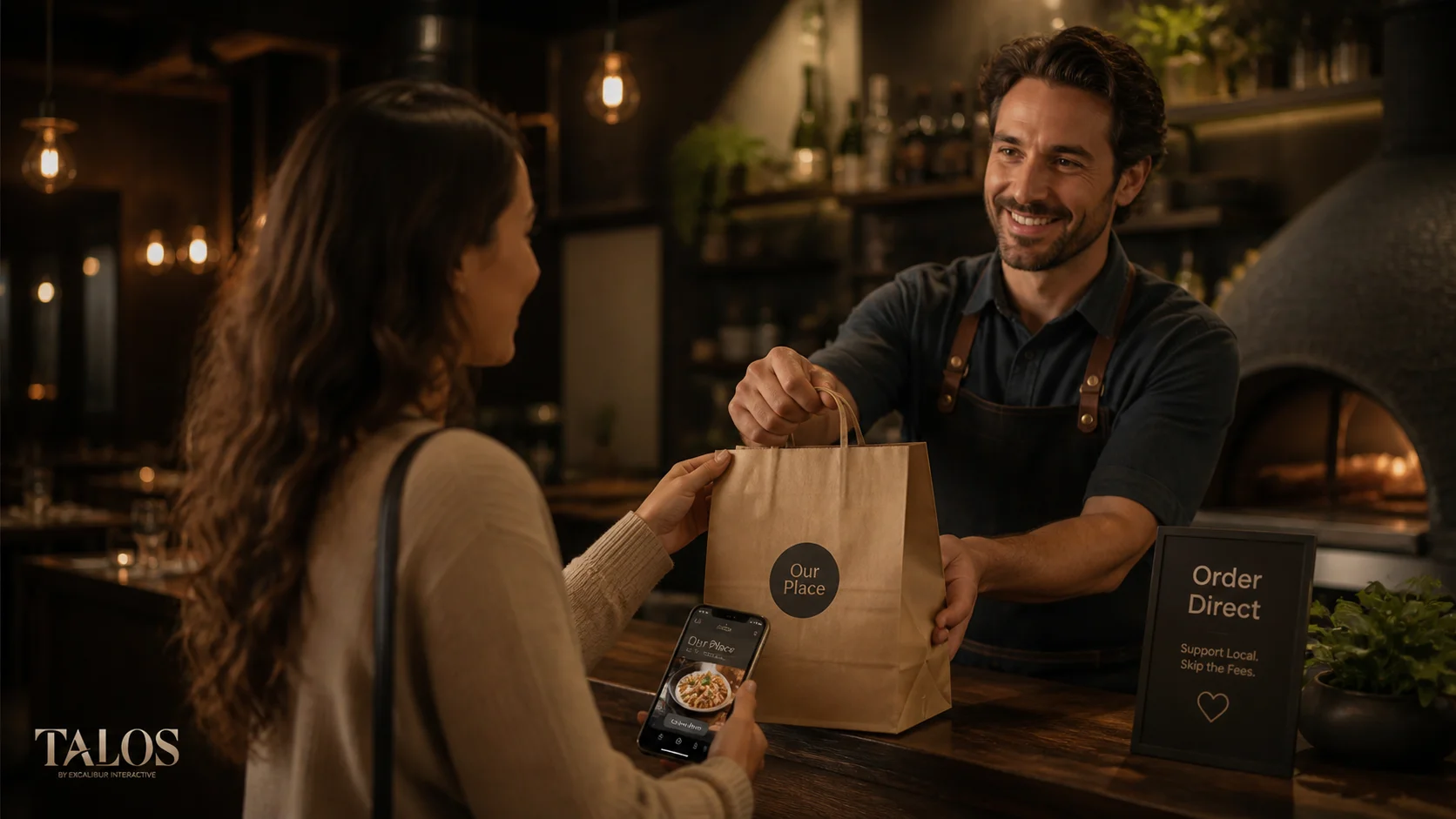
If you have ever looked at a busy Friday night and still felt like the numbers do not add up, you are not imagining it.
Restaurants run on tight margins. When a third-party delivery app takes 15% to 30% of an order, that fee does not come out of thin air. It comes out of your profit, your ability to hire, and your ability to keep quality consistent.
The frustrating part is this: a lot of those customers already like your food. They are not loyal to the app. They are loyal to the meal. The app just owns the relationship.
So if you have been thinking, “I need more direct orders,” you are on the right track. The question is what direct should actually mean, and what to watch out for so you do not swap one problem for another.
The real cost of marketplace apps is not just the commission
Most owners think of delivery apps as a tradeoff: “I lose a chunk, but I get exposure.”
Sometimes that is true early on. But once you are established, the math gets annoying fast.
First, the commission takes a real bite out of every order. Then you start feeling pressure to run discounts. Then you realize your regular customer is still ordering through the app, and you are paying that cut on people who were going to buy from you anyway.
And maybe the biggest one: you are not building a customer list. You are building the app’s customer list.
What “direct ordering” should actually mean
A lot of platforms say “commission-free,” but that phrase can hide a lot.
Real direct ordering is pretty simple. Your customer orders on your site, under your brand. You own the relationship and the repeat business. And the costs stay predictable as you grow.
That last part matters more than most people think. Some systems replace commission with a per-order fee, a customer “support fee,” or a bundle of add-ons that only shows up after you are already live. The result is the same: your online ordering costs creep up until you are right back to asking, “Why am I paying this much?”
“But I do not want to build or manage tech.” You should not have to.
You are not trying to become a software manager. You are trying to run a restaurant.
The best direct ordering setup is the one you barely have to think about.
Menu setup should be handled for you or made simple enough that it does not turn into a week-long project. Branding should look like your restaurant without a million back-and-forth messages. And the day-to-day dashboard should be something a manager can use during the rush without getting lost.
If direct ordering adds work, it is not really helping. It needs to reduce chaos, not create it.
Pickup is often the fastest win
Delivery gets all the attention because the fees are so painful, but pickup is often where the quickest profit lives.
Pickup orders tend to be higher-margin. Customers are more willing to order direct when they are picking up. And you can convert regulars faster because the habit is easy: they already like you, they just need a clean, simple link to order.
If you want a low-friction way to start pulling orders back, pickup is usually the place to begin.
Delivery does not have to mean giving up 30%
If you offer delivery, you basically have two paths.
The first is the marketplace path: the app brings the customer, the app provides the driver, and you pay the commission.
The second is a direct path: the order stays under your brand, and delivery is handled in the background through a driver network. In that model, delivery is a service layer. It is not the relationship.
That difference is everything.
When the order is yours, you are not competing on a screen full of other restaurants. Your marketing points to a place you actually own. And the customer experience stays consistent from the first click to the last.
The only question that really matters: who owns the customer?
If you want one filter that cuts through the noise, it is this: when the order comes in, is it your customer or the platform’s customer?
If the platform owns the relationship, they control the repeat order. They control the marketing. And they can change the rules any time.
If you own the ordering lane, the benefits compound. Every regular you convert makes the next month easier.
A quick way to think about it: build the lane you own
Imagine a third party owned your dining room.
They decide which customers you see first. They seat your competitors right next to you. They charge you for visibility inside your own restaurant. And they take a cut of every ticket.
You would never accept that long-term.
Your online ordering is the same. When you own the channel, you get compounding benefits. Every repeat order costs less to earn. Your brand stays consistent. And you finally have a reliable place to send customers when you post on Instagram, update your Google listing, or hand someone a receipt.
If you want to see what direct ordering can look like
If you are exploring direct online ordering, the main thing to look for is a setup that respects your margins and keeps the customer relationship under your brand.
Talos is built for independent restaurants that want their own branded ordering channel, a simple dashboard, and delivery support without handing over 30% of every order.
If you are curious, reach out and we promise we will help you truly own your margins, and your customers.