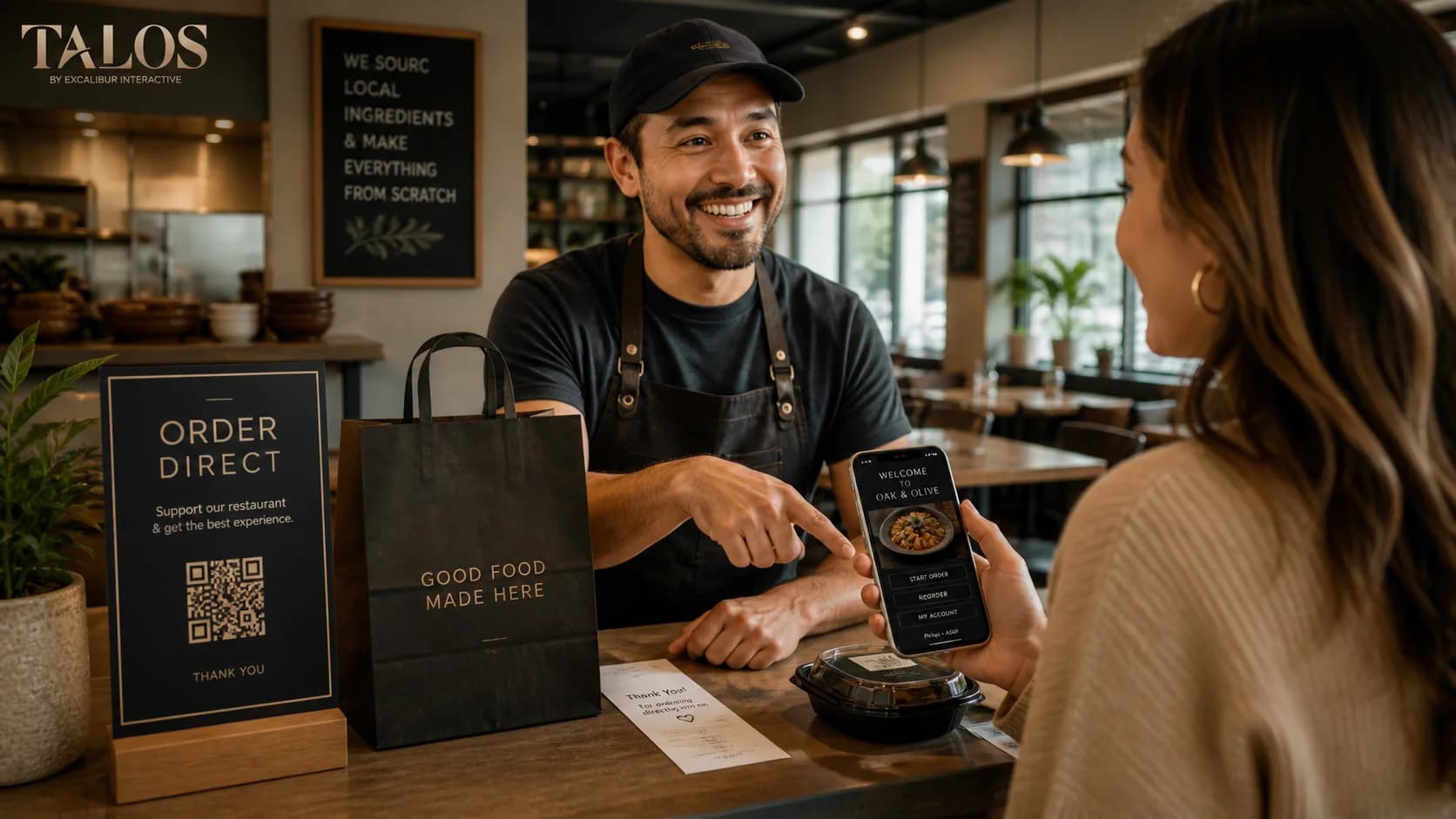
A lot of restaurant owners already know they need more direct orders.
The problem usually is not the tech. If the ordering site is already live, the real issue is getting people to use it often enough that it becomes the default.
That is where many restaurants stall out. They launch the site, mention it once, and then wonder why customers still end up on DoorDash or Uber Eats.
And the frustrating part is, most of those customers are not new. They already know the food. They already have a favorite order. They just got into the habit of using an app, and now you are paying 15% to 30% on people who were going to buy from you anyway.
That habit can be redirected. And it does not require a giant marketing budget. Most of the time, it comes down to visibility, a little incentive, and staying in front of your customers consistently.
Make the path obvious
If someone wants to order from your restaurant, there should be no confusion about where to go.
Your direct ordering link should be easy to find:
on your website
in your Instagram bio
on your Google Business Profile
on printed menus, bag inserts, and counter signs
anywhere else customers already look for you
The mistake many restaurants make is hiding the link like it is a secondary feature. If direct ordering matters to your margins and your customer relationships, it has to be treated like one of the main ways people buy from you.
Give people a reason to try it once
The first direct order is the hard one. After that, the habit becomes much easier to repeat.
That is why a small offer can work well. It does not need to be dramatic:
a first-order discount
a bundle that only exists on your own site
a simple loyalty reward
The goal is not to train customers to wait for deals. The goal is to remove the friction of trying something new. Just enough incentive for someone to experience how easy ordering direct can be.
Lean harder into pickup
If the goal is protecting margins, pickup is one of the easiest places to start.
A lot of customers who are willing to pick up do not need a marketplace app in the middle. They just need a fast, reliable ordering experience and a clear reason to use it. Instead of talking only about delivery, highlight how easy pickup is. Remind customers they can order directly, skip the extra fees, and get the same food without a middleman app taking a cut.
For many restaurants, that is the fastest path to shifting behavior. And the numbers back it up. 67% of consumers say they prefer ordering directly from a restaurant's own website or app, and 61% of those say it is because they want to support the restaurant directly.
Use your socials and Google to drive orders
Most restaurants use social media to build awareness. That is fine, but it is only half the job. Every post, Story, or reel is also an opportunity to drive an order.
Instead of posting a photo of a dish and hoping someone remembers you later, give them a direct path. Link to the ordering site in the caption or Story. Call out something specific they can order right now. Make the post feel less like a billboard and more like a menu someone can act on. Stories work especially well because the link is one tap away. A quick shot of a dish coming out of the kitchen with "order this for pickup tonight" does more than a polished brand post that just sits there looking nice.
The same logic applies to Google. A lot of ordering decisions start with a branded search. Someone types your restaurant name, checks the hours, and decides where to click. Make sure your Google Business Profile links to the ordering experience, not a generic homepage. Keep it active with current photos, accurate hours, and updates. When someone is already searching for you by name, that is one of the best moments to move them into a channel you control.
Use email to bring customers back
Here is something marketplace apps never give you: a real customer list. When customers order through your own site, you get names, order history, frequency, and what they like to order. That is not just data sitting in a dashboard. That is your re-engagement strategy.
A simple email once a week or every other week is enough to stay top of mind. It does not need to be complicated. A new menu item, a weekend special, a limited-time deal for direct orders. The bar is low because you are emailing people who already know and like your food. You are not cold-pitching strangers.
Where it gets really useful is when you start breaking customers down by what they actually order. Someone who orders the same chicken dish every week might be interested when you add a new chicken entree. A customer who only orders appetizers might try a combo deal. You can promote new items to the people most likely to care, instead of blasting the same generic message to everyone.
For customers who have gone quiet, a small offer can pull them back before they default to an app. Something like "It has been a minute. Here is 10% off your next order" is simple, cheap, and effective. You already have the data to know who has gone quiet. Use it.
Tools like Mailchimp or any basic email platform work fine for this. The key is consistency. A restaurant that sends one email a week to its direct ordering customers is doing more than 90% of independents. And every email that drives an order back to your site instead of a marketplace app is an order where you keep the full margin.
See what direct ordering looks like for your restaurant
Marketing a direct ordering site does not have to be something you figure out alone. At Talos, we work with our restaurant partners to help them promote their ordering channel, grow their direct orders, and build stronger customer relationships. Advice like what you just read is part of how we support the restaurants we work with.
Talos helps independent restaurants run a branded ordering site under their own name, with pickup and delivery, without handing over a huge cut of every order to marketplace apps.
If you want to see how it works, take a look and see if it fits how your restaurant operates.